 been.design
How to explain an AI product on your website.
Start with the user's task, show the input and useful output, then give technical buyers a route to deeper evidence. An AI product website needs an accurate explanation of the product before it needs a visual theme.
Put a recognisable workflow first.
Describe what happens before, during and after the product is used. Name the person doing the work and the output they can inspect. This gives a visitor a basis for evaluating the product without needing to adopt your technical vocabulary.
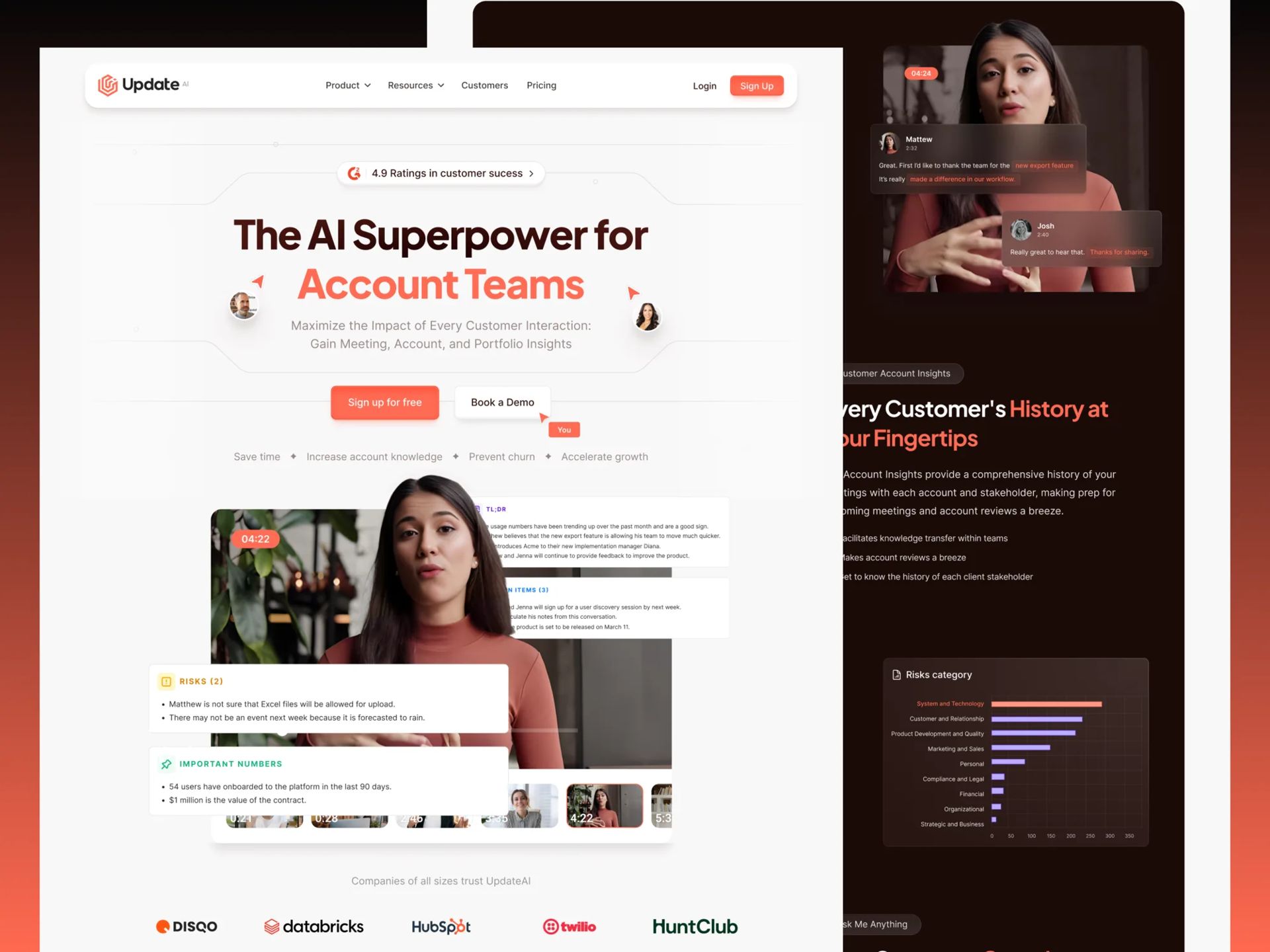
Update.ai's project connected meeting recaps, follow-up actions and stakeholder information within an account-intelligence story. Minexa used a webpage-to-data sequence to connect its extension and API. They are different products, with different explanations.
Use visuals that carry information.
Choose a product screen, faithful workflow diagram or labelled example for the question being answered. Put enough context around the visual for someone to understand it without watching an animation.
The Update.ai project record describes anonymising data in public product visuals. Use the same approval discipline for customer names, conversation content and commercially sensitive examples. A demonstration can use illustrative data, provided its status is clear.
Give technical detail its own route.
Enterprise buyers may need architecture, deployment and security information that an early-stage visitor will not read immediately. Put that material behind clear, relevant links while keeping the opening explanation understandable.
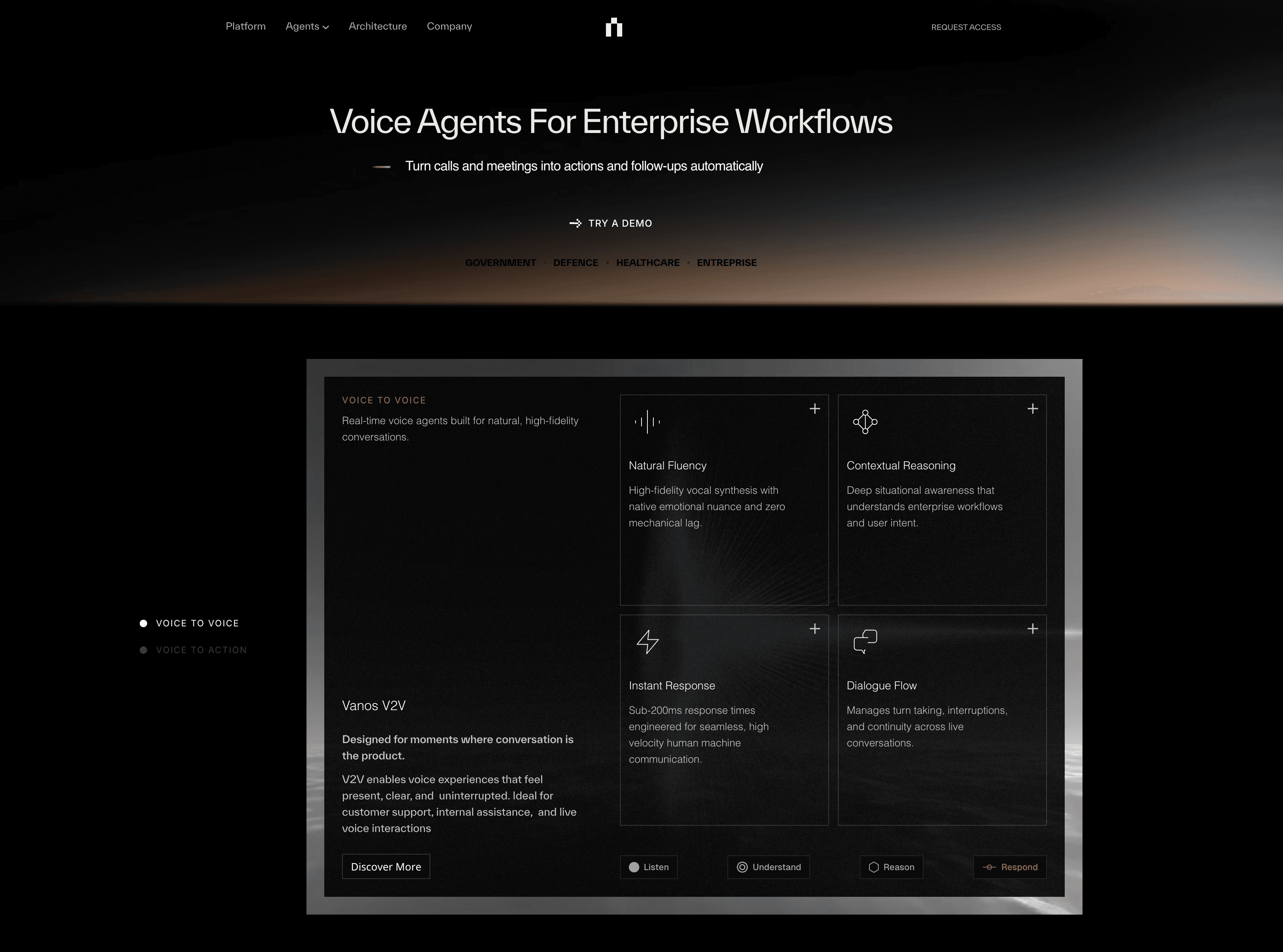
Vanos separates platform, agents and architecture. Spacedome gives research and product systems distinct places in its site structure. Their case studies document communication decisions; they do not verify runtime performance or security guarantees.
Keep a claim register.
Assign an owner to each answer before publishing. The copy and design team can make the explanation clearer, but the product team must approve the underlying facts.
- Feature: is it available, a preview or a roadmap item?
- Performance: what was tested, under which conditions and when?
- Security: which current documentation can the buyer inspect?
- Customer proof: do we have permission and the original wording?
- Example: is the screen real, anonymised or illustrative?
Make the same explanation available in text.
Keep the product description and supporting detail readable in the page, with descriptive links to relevant material. Do not rely on a video or screenshot as the only explanation.
Google's guidance says the normal search foundations remain relevant to its AI features. It does not require an AI-specific file or special schema. This site's LLM-readable summaries support other discovery uses; they are not a Google ranking promise.
Decide what happens after interest.
A self-serve trial needs a different journey from an enterprise evaluation. Explain the actual next step, the information requested and what the visitor should expect. Match the measurement plan to that action rather than treating every click as a sale.
Sources and further reading.
Primary documentation referenced for this guide. Platform features and requirements can change; check the current documentation for your project.